Pemanfaatan Website BK untuk Mengurangi Stigma Negatif dan Meningkatkan Minat Siswa
Keywords:
Guidance and Counseling, BK Website, Digital Counseling, Cyber Counseling, Student Stigma, Society 5.0; Educational Technology, Mental Health ServicesAbstract
Objective:
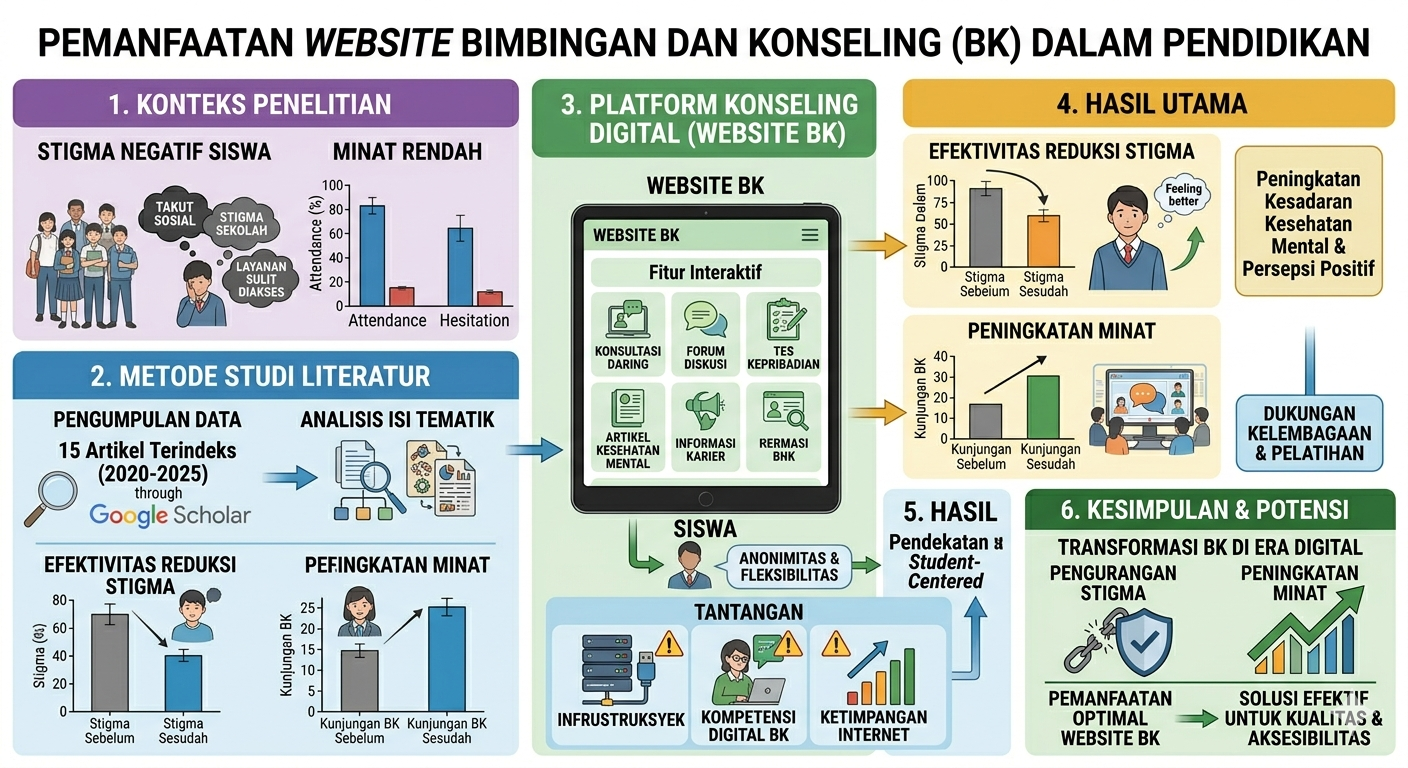
This study aims to analyze the utilization of Guidance and Counseling (BK) websites in reducing negative stigma toward counseling services and increasing students’ interest in using school counseling services. The study focuses on how digital-based counseling platforms can create services that are more accessible, flexible, and student-friendly in the digital era.
Method:
This study employed a descriptive qualitative approach using a literature review method. Data were collected from 15 indexed scientific articles published between 2020 and 2025 through academic databases such as Google Scholar. The selected literature focused on cyber counseling, digital counseling services, students’ stigma toward counseling services, and the utilization of technology in education. Data analysis was conducted using thematic content analysis to identify patterns, trends, and findings relevant to the objectives of the study.
Results:
The findings indicate that BK websites are effective in reducing students’ negative stigma toward counseling services because they provide anonymous, flexible, and easily accessible services. Interactive features such as online consultations, discussion forums, personality tests, mental health articles, and career information were found to increase student engagement and interest in counseling services. Several studies also reported an increase in counseling service utilization after the implementation of BK websites in schools. Furthermore, the use of digital counseling platforms contributes to improving students’ awareness of mental health and fostering more positive perceptions of counseling services.
Discussion:
The discussion highlights that BK websites function not only as informational media but also as strategic counseling service platforms that support a student-centered service approach. The anonymity and ease of access offered by BK websites help students overcome psychological barriers and social anxiety related to face-to-face counseling. However, the implementation of BK websites still faces several challenges, including limited technological infrastructure, low digital competence among school counselors, and unequal internet access in certain regions. Therefore, institutional support, continuous professional training for counselors, and consistent website management are necessary to optimize the effectiveness of digital counseling services in schools.
Conclusion:
The utilization of BK websites has significant potential to transform guidance and counseling services in schools by reducing negative stigma and increasing students’ interest in counseling services. Digital-based counseling services provide an innovative, inclusive, and technology-oriented approach that aligns with the characteristics of today’s student generation. Properly managed BK websites can become an effective solution for improving the quality and accessibility of counseling services in the digital era.
Downloads
References
Fadhilah, M. F., Alkindi, D., & Muhid, A. (2021). Cyber counseling sebagai metode meningkatkan layanan bimbingan dan konseling di sekolah: Literature review. Counsellia: Jurnal Bimbingan dan Konseling, 11(1), 86–94. https://doi.org/10.25273/counsellia.v11i1.8393
Gading, I. K. (2020). The development of cyber counseling as a counseling service model for high school students in the digital age. Jurnal Pendidikan Indonesia, 9(2), 301–309. https://doi.org/10.23887/jpi-undiksha.v9i2.25469
Ifdil, I., & Ardi, Z. (2013). Konseling online sebagai salah satu bentuk pelayanan e-konseling. Jurnal Konseling dan Pendidikan, 1(1), 15–21. https://doi.org/10.29210/17000
Jinggoi, J., & Arswimba, B. A. (2025). Tingkat minat siswa SMP Negeri 3 Yogyakarta terhadap layanan cybercounseling. Aliansi: Jurnal Hukum, Pendidikan dan Sosial Humaniora, 2(4), 133–142. https://doi.org/10.62383/aliansi.v2i4.1034
Laksana, E. P., Mapiare-AT, A., & Lasan, B. B. (2022). Studi fenomenologi pengaruh sosial guru bimbingan dan konseling. Jurnal Pembelajaran, Bimbingan, dan Pengelolaan Pendidikan, 2(9), 8–18. https://doi.org/10.17977/um062v2i9p8-18
Mayasari, A. (2022). Cyber counseling sebagai layanan bimbingan dan konseling di masa pandemi. Indonesian Journal of Guidance and Counseling: Theory and Application, 11(Special Ed), 26–34. https://doi.org/10.15294/ijgc.v11i2.60801
Nursalim, M. (2020). Peluang dan tantangan profesi bimbingan dan konseling di era revolusi industri 4.0. PD ABKIN JATIM Open Journal System, 1(1), 31–40.
Pasmawati, H. (2016). Cyber counseling sebagai metode pengembangan layanan konseling di era global. Jurnal Ilmiah Syi’ar, 16(1), 43–54.
Prasetiawan, H. (2016). Cyber counseling berbantuan Facebook untuk mengurangi kecanduan game online. Jurnal Bimbingan dan Konseling, 6(1), 28–36.
Sari, M., Firman, Suhaili, N., & Che Amat, M. A. B. (2023). The importance of infrastructure management in implementing guidance and counseling services in senior high schools. Indonesian Journal of Counseling and Development, 5(2), 92–101. https://doi.org/10.32939/ijcd.v5i2.2794
Seprianto, S., Fadila, F., Ristianti, D. H., & Azwar, B. (2024). Implementasi layanan bimbingan konseling dalam mewujudkan kesejahteraan psikologis siswa di SMPIT An-Nida. Muhafadzah, 4(2), 103–117.
Sugiyono. (2020). Metode penelitian kuantitatif, kualitatif, dan R&D. Alfabeta.
Sukamto, S., & Suryadi, S. (2022). Cyber counseling: Media & solusi layanan konseling di tengah pandemi Covid-19. Hisbah: Jurnal Bimbingan Konseling dan Dakwah Islam, 19(1), 88–106.
Sutijono, S., & Farid, D. A. M. (2018). Cyber counseling di era generasi milenial. Sosiohumanika, 11(1), 23–34.
Zahara, C. I., Lubis, L., & Aziz, A. (2019). Hubungan persepsi siswa terhadap konselor dan sarana prasarana BK dengan minat layanan konseling di SMPN 2 Dewantara Kabupaten Aceh Utara. Tabularasa: Jurnal Ilmiah Magister Psikologi, 1(2), 116–123.
Downloads
Published
Issue
Section
License
Copyright (c) 2026 Noel Friendly Simanjuntak, Mutiara N. S. Br Marpaung, Ignateus Ernes, Vini Patricia Uli Manurung (Author)

This work is licensed under a Creative Commons Attribution-ShareAlike 4.0 International License.